 A night at the dogs used to be one of the nations favourites past items. There was a plethora of licensed and even unlicensed dog tracks throughout the UK and with it the sport drew in millions of punters and pounds every year.
But, in more recent times, the sport has seen a huge decline both in the form of people attending and then in the form of dog tracks that are still open. It’s been hit hard by a number of factors and as the range of sports that people can participate in and enjoy increase, unfortunately, some are being left behind.
How did a sport that used to get multiple millions of people attend every year and was worth huge sums of money both to the economy and the betting industry fall in such dire decline? We take a look at the timeline of how British greyhound racing has declined and if there is any future for the sport moving forward.
First Track – Belle Vue
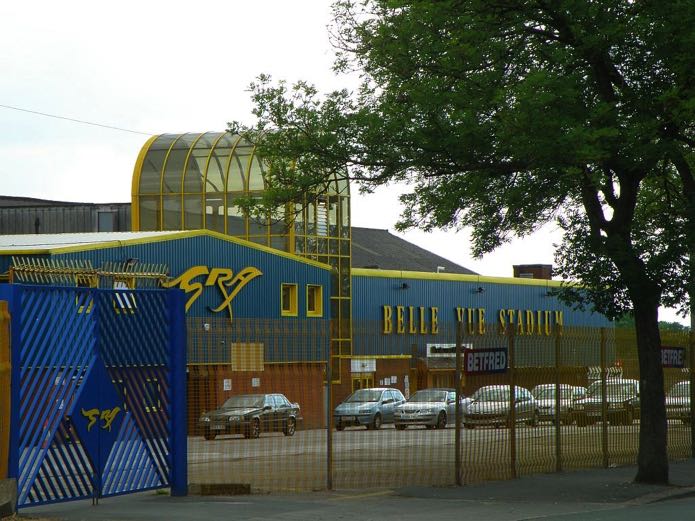

As a sport, greyhound racing had been about since 1776. It was first run in Swaffham in Norfolk and the dogs often went head to head in races that contained just two dogs. Initially, the races were run using a real hare and it wasn’t until some 100 years before the first artificial hare was introduced.
As a sport, it hadn’t really taken off. It was seen as a bit elitist and, as a result, couldn’t match the popularity of sports like horse racing. But the sport proved really popular across the pond in the US and it was only the success that was seen here that prompted people in the UK to get on board.
Opening Meeting
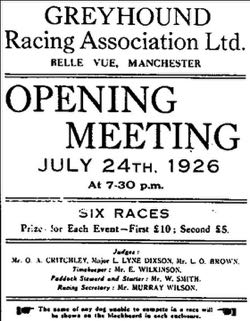

The first oval shaped track was that of Belle Vue in Manchester. A kitty of £22,000 was formed for the completion of the track in 1926, which was also aimed to create a governing body, which was named the Greyhound Racing Association that would essentially oversee all racing in the country.
The success was instant. The opening night saw crowds of 1,700 attend, which was almost unthinkable at the time. But, by the time the second race meeting held, these crowds had jumped to over 16,000 for a single meeting.
The success quickly caught on and within just 12 months of Belle Vue opening, there were 40 dog tracks situated across the UK. In 12 short months, the sport had come alive!
17 Million by 1930
The success was crazy. It was a sport that so many people were loving and reports suggest that by the end of the 1920s and into the 1930s, there were more than 17 million people per year that used to attend any of the licensed dog tracks. Bear in mind, there were many unlicensed as well, which means this number is likely much, much higher.
The Working Class’ Horse Racing
It was the working-class folk that were drawn into the sport and with it saw them flock to races. At the time, horse racing was a very popular sport, probably the biggest in the UK. But it was seen as an elitist sport and often priced out the working man as result.
Dog racing was not that. It was cheap, no frills, a little bit dodgy and sat right at home with that of the working class. Whilst the tracks weren’t terrible places to be by any means, it was a place where people could mix with others of similar ilk and, as a result, the punters flocked to the courses in their droves. These people were proud of their working-class background and a night at the dogs was the perfect way to enjoy themselves and have a good time.
You have to remember at the time that working-class folk were not able to get a legal bet. This changed when dog tracks opened as it now meant they could bet legally. There was no chance of them getting any credit at bookmakers, unlike the middle or upper class, so everything was paid out of pocked in cash and up front.
Greyhound racing meant that the working-class had the same rights and access to live sports as the upper-class with their ties to horse racing. It was exciting times for the sport.
Early Expansion – Height of 77 Tracks + 200 Unlicensed
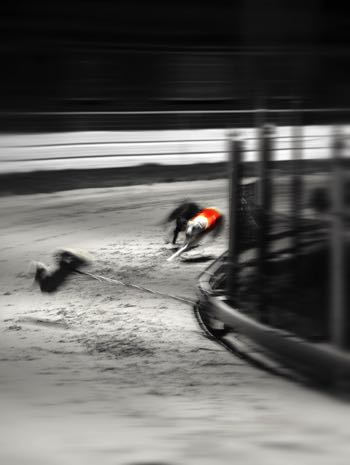 The sport continued to grow, as did the number of tracks. At its peak, there were 77 dog tracks in the UK that were fully licensed. They ran from the top of the country to the bottom and what was great about it, is that there were very little north-south divisions in terms of the exclusivity in tracks. It was truly a people’s sport.
The numbers continued to rise. White City Stadium in London was just one of a high of 22 tracks that were in the capital alone. This quickly grew to be one of the most popular tracks and used to pull in crowds in excess of 100,000 people for a single evening racing, and hosted one of the most prestigious races in the country, The Derby.
The unlicensed scene, whilst clearly not licensed by the Greyhound Racing Association, was another sector of the industry that was massive. Here they had over 200 tracks in total and were often seen as a great place to see up and coming dogs test their metal for higher profile races.
Royal Approval
Whilst the sport was very much working-class at its core, it’s still one that has a huge audience of upper-class people involved, as well. A prime example of this is when Prince Phillip bought the White City Stadium in London at a time when greyhound racing was at its peak.
Even though it didn’t have the draw of horse racing for the rich and famous, the sport still had a huge influence from them and as the crowds and money started to increase, as did the upper-class interest. Royal family and even celebrates were often seen frequenting at popular dog racing tracks, which gained another bit of power for the sport.
Off Course Betting Becomes Legal
The first chink in the armour of greyhound racing came about in 1961 when the laws changed regarding high street bookmakers. The Gambling Act that was passed removed high street bookmaking from being an illegal activity due to the resources that it was costing to police it and now we started to see the first legal betting shops appear on the high street.
In in years gone by, the only place that people could bet was at dog tracks and racecourses, like with greyhound racing and horse racing. This was a massive part of the entertainment of the sport for many and huge reason why they would attend the tracks.
The ability to bet off the course was the first time that numbers started to significantly decline. Greyhound racing had been able to overcome things like two World Wars, but this was going to prove to be a bigger problem for the industry than even that.
The numbers were going downwards and the result of this was pretty much from the legalisation of betting shops. The need to attend courses to place a bet had been removed and many state that this was the beginning of the end for greyhound racing in the UK.
1993 – Betting Shops Granted a Late License
By 1993 the number of dog tracks were already starting to diminish. However, a law was passed that allowed bookmakers to continue to operate past the previous closing time of 5pm and into the night.
This was damming given the fact that many greyhound races were staged at night, allowing people to attend after work. Like the initial impact of betting shops opening in the first place, this was another problem for the sport and possibly had an even bigger effect given the times that races were run.
Change of Leisure Activities
In the 1920s and even after the war, there wasn’t a huge amount of things to do for a lot of people at that time. Greyhound racing offered something new and different. It allowed people to not just go to the pub or stay at home. It gave people an option, for one of the first times.
However, as the number of leisure activates that became available to people started to increase, the popularity in greyhound racing started to decrease. People liked things like disco halls, cinemas, restaurants and other sports more, with grey hound racing starting to form a bit of a stigma around it as an “old”, pastime, especially for the younger generation.
As the number of people were declining, the quality of the tracks and the facilitates on offer also declined. No longer were people getting dressed up in the Sunday best to go to the races. Instead they were avoiding old, run-down buildings that hadn’t seen much or even any updating for decades.
The people that owned the track were at a Catch 22. They were making less as people weren’t attending, but they couldn’t invest to make a nicer surrounding as the money wasn’t available to them. Those that did try to invest often failed and ultimately closed.
Animal Welfare
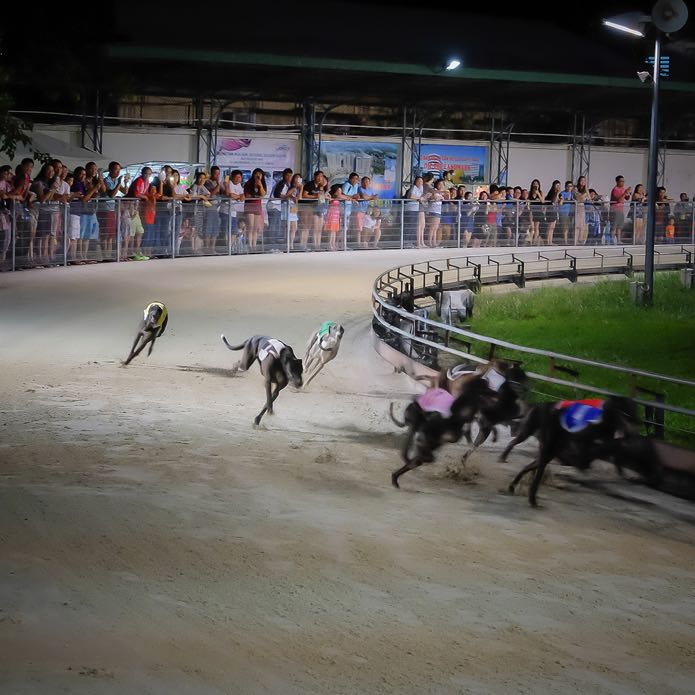
For the first time, the welfare of the dogs were starting to be called into question. Whilst they were often well looked after whilst they were racing, the problems arose when dogs retired or were no longer making anything. They were bread in their masses to find that special winner, but those that made the cut were sometimes given the cut.
It is reported that around 3,700 of 9,000 retired dogs are unaccounted for every year. It’s a shocking statistic and one that has made the powers that be stand up. It’s also been able to get massive national press as a result, which in turn has put people off from attending.
Whilst measures had been put in place to try and stop this, mainly in the way of fines, there’s little doubt that the illegal culling of retired grey hounds has been going on for years.
Arise Online Betting
If the opening of high street bookmakers in the sixties was bad, then online betting took these same problems to a whole new level. The online boom came around about the turn of the millennium and it’s been one that has revolutionised the way in which we bet.
Not only do punters not need to attend the tracks to bet anymore, they don’t even need to leave the comfort of their own home. The ability to access dozens of bookmakers offering up hundreds of races everyday has mean that it’s easier than ever to place a bet.
Sports like greyhound racing, that has relied on on-course bookmaking for so long, have been hit the hardest with online betting. Not only does it mean that people don’t need to attend, but it means that there are a plethora of other sports and betting markets that they can bet on, with greyhound racing falling down the pecking order.
Greyhound Tracks Worth More as Land
Another of the major reasons why track numbers have demised is the fact that the land is now worth more than the money that most of them make. Land in the UK is a commodity and especially in the built-up towns and cities that the tracks were famed for occupying.
A number of tracks have been knocked down to build new housing and commercial developments on. Many owners have cashed in on the fact that as a business, they are worth very little, but given the size of the plots of land that they sit on are actually very lucrative.
Wimbledon Stadium is one of the latest and the highest profile of any of the recent closures. In 2017, it was announced that they were to sell the land and demolition started in 2018 to then erect over 600 homes and part of the new football stadium. This is even despite a failed rival bid of the track worth £20 million, which was rejected, highlighting how lucrative the plots have become and also highlighting the potential size of the developments on offer.
Online Betting Saves the Sport?
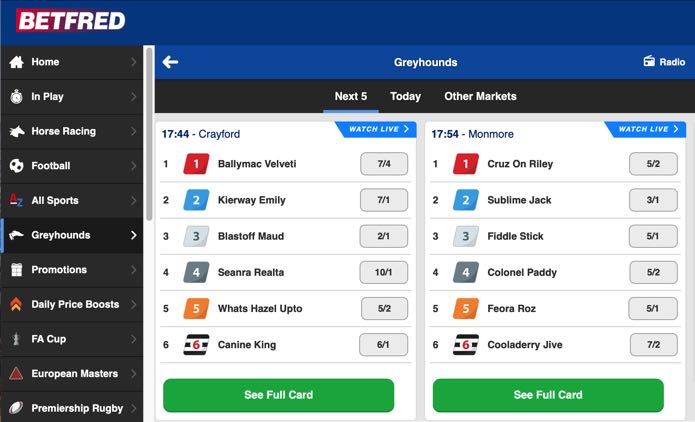
We spoke about how online betting was one of the initial factors as to why the sport was dying, but in a strange twist, it could also be the saviour. Even with just over 20 tracks left throughout the whole of the UK, this still means that there is quite a bit racing that takes place every week. The fact is that people still bet on greyhound racing, even if it’s not at the track anymore. It’s in the bookmaker’s best interest to keep them open as people who are betting means that they are going to make money.
What’s happened is that the bookmakers have been starting to acquire tracks and keep them open for this very reason. The likes of Brighton and Hove (Coral), Crayford Stadium (Ladbrokes), Romford (Coral) and Sunderland (Ladbrokes) have all been purchased and kept alive. It’s heavily rumoured that more will follow, as well.
You see, even if these tracks aren’t directly making money, these numbers can be offset by the bookmaker in terms of the number of bets they take online to subsidise these losses and still make them profitable to run.
There have been some sceptics of this and rightly so, stating that they are running the tracks into the ground and they are in awful condition given that they don’t need people to even turn up, just for the races to run. But, the Greyhound Racing Association have stepped in saying that tracks must meet a minimum standard, whatever that might be.
For the time being, it’s keeping the tracks open and the industry alive. It’s meant that only a couple of tracks have closed in almost a decade now and it’s the longest period of stability the sport has had in terms of the number of tracks since the glory years in the 1930s.
80% of Dogs Now Rehomed
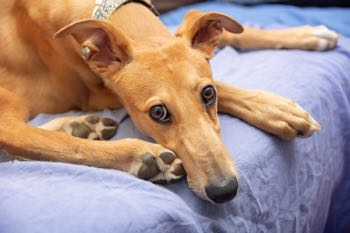 The sports image of being one that almost turned a blind eye to the staggering stats of almost half of all retired grey hounds to be unaccounted for is one that is starting to clean itself up. It was reported in 2018 that almost 80% of all retired grey hounds are now accounted for and tracked, which is a huge number.
Campaigners will not rest until this number is up to 100% and rightly so, but it’s a move in the right direction to clean up the image of grey hound racing. The glory days are long gone, but it’s things like this that will help keep what’s still running open and may even spark an upturn in tracks as a result.