 Ladbrokes are one of the best-known companies within the gambling industry. They’ve been about since 1896 making them one of the oldest in operation.
These days, they are part of the Ladbrokes Coral Group, but they still operate under their original name of Ladbrokes. In terms of high street stores, they are still able to entertain over 3,500 units in total, which is pretty impressive given that there are only 9,000 in total left in the UK.
Looking to bet online?
If you're looking for a place to bet online, don't miss our hand selected list of the best bookies on the web. We've spent countless hours testing the sites to ensure that we only recommend high quality bookmakers with great features, decent odds and excellent customer support. Plus most offer free bets when you sign up.
High Street Betting Shops

Ladbrokes are a company that is most definitely bucking the trend when it comes to high street betting. The industry is shrinking, mainly down to that of online and mobile betting, but Ladbrokes are one of few brands that have been able to keep their heads above the water and even flourish, to a certain extent at least.
As we have mentioned, they currently have over 3,500 stores across the UK, and with it they have over 25,000 staff, making them the biggest betting employers in the industry. But, the merger between Ladbrokes and Coral did result in the company having to sell off 359 shops to satisfy that of the Competition and Markets Authority who are in place to make sure that once company doesn’t have an overriding monopoly over the industry.
The deal to sell the shops was reported to be worth in excess of £55million, with 322 stores going to Betfred and the remaining 37 stores going to that of online bookmaker Stan James. Whilst the numbers seem large a 10% reduction in their share of high street shops for the merger with Coral was mere small fry, of which we will talk more about later in this article.
But, the deal is a bittersweet one for Ladbrokes as it means the sale of stores to one of their biggest high street rivals, Betfred. The addition of the some 322 stores to Betfred will now mean that they have around 1,700 stores in total throughout the UK.
On the Internet
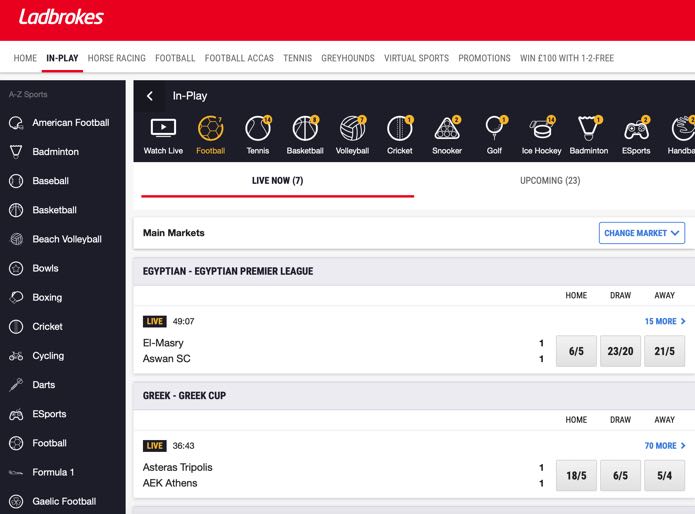
The online sector at Ladbrokes is booming, which is pretty common for most of the bookies that we have covered. The site has seen huge changes over the last few years and whilst they’ve always been deemed as one of the better bookies, the recent design has allowed them to be one of the best.
The design of the site now works much better with both online and mobile platforms, something that you could have argued was severely lacking previously. What we liked about the design was the fact that it was fairly unique to the Ladbrokes brand and even separated from that of Coral, creating two different betting opportunities.
Ladbrokes have also been pretty proactive in creating innovating products such as cash out, football coupons, live streaming, in-play betting, statistical analysis, betting data and also a huge range of offers and promotions for both new and existing customers.
The Grid
 The Grid is probably the best link we have seen between betting online and betting in your high street store. It’s pretty fitting that Ladbrokes are the brains behind it, especially given their situation within the industry as leading figures of high street betting.
The Grid allows you to basically link your online account to bets that you have placed in store. After you have registered to be a part of it you are able to use your phone or your key fob to track bets that you’ve placed in store within the dedicated app. You are even able to scan your bet slips to store them on your phone and essentially see them just as you would if you’d bet online.
The Grid links up features such as live streaming, football stats, form, predictors, bet finders and shop locators all in one. It’s also worth noting that when you sue your account within The Grid you are going to be in with a chance of winning several prizes and money back bonuses. You will also earn points every time you place a bet in store, gaining 1 point for every £4 staked over the counter or 1 points for every £10 staked on gaming machines.
About Ladbrokes

Ladbrokes was founded in 1886 by Mr Schwind and Pennington. The pair started one of the most fruitful partnerships in betting history by simply coming together to back and train race horses. They worked out of Ladbroke, England, which is a small town about 2 miles out of Warwickshire. It was 6 years after when they enlisted the help of Arthur Bendir, who was also the founder of the name, Ladbrokes.
The coalition of Bendir was probably the most pivotal point in the history of Ladbrokes as he changed both Schwind and Pennington’s aim of backing horses, to betting against them, essentially setting roots to become bookmakers.
Original Business Model
Thee trio set about targeting wealthy businessmen, who were often part of exclusive clubs. This not only allowed them to follow the money, but it also kept the law of their backs as back then, betting was illegal, except from if you were associated to said clubs.
As they started to gain popularity, they needed to expand, and they did so by adding a fourth partner to the group, this time in the form of Helen Vernet in 1918. It was a really bold move by the group as in those days the bookmaking and betting game wasn’t a place for women, so to see someone come in with so much power, was highly unusual. But, such was Vernet’s popularity, she spent many years with the group and eventually became the face of Ladbrokes and often was seen as a pioneer for women to access this male dominant industry.
The Reign of Stein
Throughout the war, the company admittedly struggled to really kick on from their bright beginning. This wasn’t so much to do with the Ladbrokes brand, but more how the industry was for a lot of companies. The company was eventually sold in 1956 following the death of Vernet to Mark Stein for the sum of £100,000.
The first that Stein set about doing was moving away from the wealthily upper class folk and to try and broaden the clientele that Ladbrokes attracted. They had been able to sit back and watch how companies, such as William Hill, operated at the time, allowing anyone who could afford to bet to do so. Stein decided that to target the working class he needed to move into areas where he could access them, with dog racing tracks being the number on priority.
Stein reduced the minimum wagers in dog tracks that they were able to get exposure and as result, the number of people flocking to bet with Ladbrokes grew massively. By 1961 when betting in high street shops was legalised, Ladbrokes now had a huge following and were able to open a number of stores throughout the UK, getting the jump on many of their competitors. As a result, they became the first chain bookmaker in the UK!
Exponential Growth
By 1967 the company had grown exponentially. They owned over 100 betting shops and even went public, offering up 1.35 million shares at 50p a piece. It’s reported that at the time, there was over £60 million in applications for these shares, such was the popularity of the brand. These figures would be pretty impressive in today’s industry, let alone over 50 years ago, signalling just how big they had become.
Timeline of Events
Over the coming decades, the company changed hands several hands, with massive deals to be had each time. Here is a quick timeline as to these events:
- In 1972 the acquisition of London and Leeds Development Corporation pushed the number of high street stores to over 1,100
- Acquisitions of Le Tierce SA (Belgium) in 1984, Detroit Race Course in 1985 and over 100 new outlets in the UK in 1987 for over £200 million, allowed Ladbroke’s to become global players for the first time.
- In 1988 they bought out Hilton International for a massive £664million, allowing them access to huge range of hotels and betting outlets across the US. Interestingly, they then sold back the stock to the same estate for £3.3 billion in 2005. Not bad business indeed!
Whilst the list of acquisitions both within and outside the betting industry could go on and on, one thing that it did show is that Ladbrokes were more than just your run of the mill high street bookmaker. They wanted and succeeded to be a global brand in anything that they could and more often than not, their acquisitions allowed them to do just that.
Cyril Stein Retires
Throughout the 1990s the company saw some big changes, but refused to stand still. The biggest was the retirement of Cyril Stein in 1993. He had managed to turn around, with his uncle a company that was on the brink of extinction and turned into one of the biggest companies of the world. We spoke earlier about their purchase price of £100,000 in 1956, well his shares on the day he retired in 1993 were worth a reported £2 billion.
The National Lottery
The following year was not only big for Ladbrokes, but also for betting shops as a whole. The National Lottery was founded and with it the government lifted many restrictions on how or what betting shops could advertise. They were allowed to include casino games and almost create their little piece of the famous Las Vegas strip at the end of streets scattered across the UK and around the world via their betting shops.
First Attempt to Merge with Coral is Scuppered
In 1997, the company made their first acquisition of Coral in a deal reported to be worth £375 million, which included 800 betting shops to add to the already impressive fleet of stores that they currently owned. But, the deal was forced to be reversed at it was deemed that they merger would give an unfair advantage and market share over their competitors or to put it simply, a monopoly.
Moving Online
The companies next meaningful step within the industry was that of online betting. Due to their already huge popularity within the betting industry and the fact that they had over 2,000 betting shops at their disposal, their online site was the fastest growing and biggest in the industry for many years.
Interestingly, they were also the first online site to translate to Thai and Chinese in an attempt to conquer the Asian betting market. To this day, Ladbrokes is still very popular with Asian bettors, allowing for a number of Asian friendly banking methods on site and also Asian focussed betting markets, such as the Asian Handicap.
Ladbrokes Coral
The merger with Coral took many years to complete, but was finally signed and sealed in July 2016 for a sum in the region of £2.3bn, making it one of the biggest acquisitions in the industry’s history. This moved the final figures for Ladbrokes Coral to 4,000 stores and 30,000 staff across the network.
Ladbrokes in the News
Ladbrokes to merge with smaller rival Coral (24th July 2015) – Ladbrokes are in talks for a deal to merger with their rival bookmaker Coral. The merger will be a £2.3bn buyout from Ladbrokes, which will make then the largest bookmaker in Britain by number of betting shops.
Ladbrokes forced out by Rust (5th September 2016) – Ladbrokes are set to be forced out the British Horseracing Authority from sponsoring the Classic, St Leger race. They are one of four high street bookmakers who refuse to sign the controversial Authorised Betting Partners Scheme outlined by Nick Rust, part of the British Horseracing Authority team.