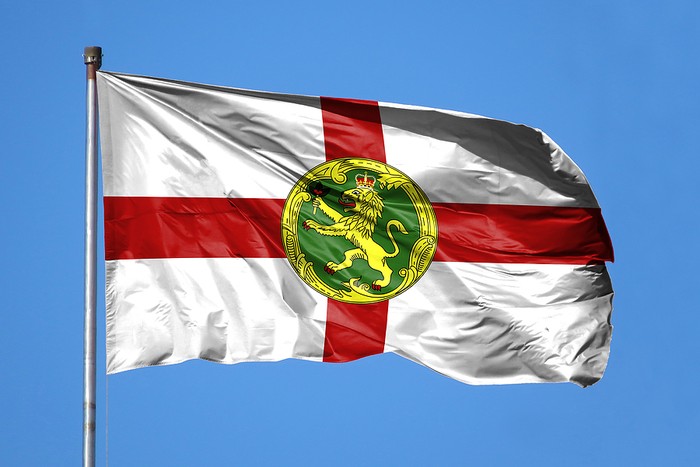
As regulators go, the Alderney Gambling Commission does not exactly have the most extensive remit.
But betting is legal on the Channel Islands, so therefore the islanders need a regulator that is tasked with protecting them from rogue operators.
The Alderney Gambling Commission is responsible for exactly that, managing licence requests from bookmakers and casinos and issuing fines and other sanctions where necessary.
And now they’ve given back to the community, donating £2.3 million in profits to the islands’ governors – they, in turn, have promised to invest £1.8 million of that into ‘capital spending’ in 2024 and beyond.
Giving Back

It’s amazing to think that Alderney’s entire capital spending budget in 2023 amounted to £1.5 million – so the Gambling Commission’s donation has more than doubled the island’s previous kitty.
The funds are likely to be reinvested into healthcare on the island, as well as other essential services.
While tourism has been a contributor to the local economy, the neighbouring Channel Islands of Jersey and Guernsey are typically more popular with visitors.
There’s plenty to see and do on Alderney, while historians can take a rather harrowing walk down memory lane by visiting the site of an old Nazi camp – the only such encampment that Germany had on UK soil during World War II.
But the Gambling Commission remains as one of Alderney’s chief sources of income – shining a light on how other regulators could go beyond simply policing the industry and instead giving back to local communities too.
Many of the leading sports betting firms are licensed by Alderney, including Betway, the Tote and Triplebet Ltd – the proprietor of the Matchbook exchange.
The regulator is perhaps best known for its work in licensing online casino operators, however, with Jumpman Gaming, Bonne Terre and Baytree just three of the sizable holding companies to have an Alderney licence, as well as software firms like NetEnt, Playtech and Kambi.
They weren’t attracted to the island due to its access to a new audience – Alderney is less than three miles wide and has fewer than 2,000 inhabitants. Instead, its lure comes in the form of its incredibly generous operating conditions – those include 0% VAT, no capital gains tax paid and 0% Gaming Duty.
Tax Haven
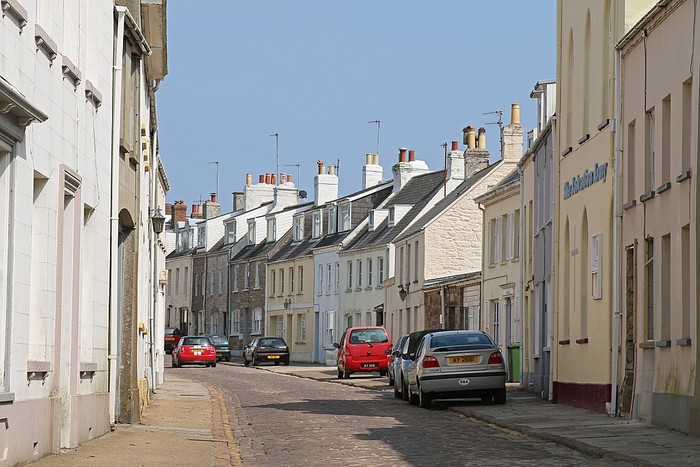

Alderney also performs another key function to the gambling sector.
Countries from outside of the European Economic Area (EEA), and which aren’t classed as being part of the UK or Gibraltar, are banned from advertising their products and services to a UK-based audience.
But Alderney acts as something of a bridge, so an operator that is licensed there can advertise in the UK – despite not being officially approved by the UK Gambling Commission.
So reliant is the island on its licensing operation, officials in Alderney have invested heavily in infrastructure designed to welcome large-scale online businesses – state-of-the-art data storage and security, as well as a dedicated cloud platform for gambling firms, are just some of the perks, alongside reduced costs for start-up companies and, of course, those unique tax conditions.
The Tote made headlines when they shifted their entire operation to Alderney in 2007. Curiously, at the time it was state-owned and run, which suggests that the UK government were only too happy to dip their toes in the water of a tax haven.
In theory, betting firms with lower costs – such as paying minimal tax – can offer better conditions for their customers, which you would think might include more agreeable odds. How true that statement is would be debatable, although it’s interesting that ‘soft’ bookmakers such as Marathon Bet are registered on Alderney.
Full Tilt Turmoil
So while operating conditions are generous on the island, that’s not to say its regulator has not been involved in controversies down the years. The most noteworthy of those was the demise of Full Tilt Poker, who operated via an Alderney licence but who went out of business when American courts decided they were illegally offering online poker to players in the United States.
The Alderney Gambling Commission suddenly became embroiled in a scandal that involved FBI investigators and dawn raids – the authority also drew controversy when they suggested on their website that the funds of UK players were safe; an assertion that would later be proven false.
Ray Bitar, the chief executive of Full Tilt, would later be charged with an array of offences, including money laundering and fraud – it was alleged that he was taking funds from some players’ accounts to pay withdrawal requests, which ultimately saw Full Tilt described as a ‘Ponzi scheme’.
Bitar was later found guilty of laundering money through the Channel Islands, with the Alderney Gambling Commission revoking Full Tilt’s operating licence and tightening their rules on offshore gaming and betting.