
The Gambling Commission has released its annual report for the 2025/26 trading year.
And despite all of the various pressures facing bookmakers and betting sites, the good news is that Gross Gambling Yield (GGY) across both retail and online was up.
However, the number of high street betting shops in the UK continued to fall for the seventh consecutive year.
Complex Industry Trends

The annual Industry Statistics report covers the period from April 2025 to March 2026.
It revealed that Gross Gambling Yield for the sector – a calculation of total betting stakes received minus the amount of winnings paid out – reached £17.5 billion.
That’s a 4% increase, year on year, on the GGY recorded in the 2024/25 accounting period.
That data refers to the total GGY including all lottery draws. When lotteries are removed the sector’s Gross Gambling Yield actually showed a 4.7% increase on 2024/25.
The industry was somewhat held strong by remote betting, with online sports bets, casino games and bingo contributing £8.3 billion in GGY – a 6.9% rise, year on year.
And Gross Gambling Yield for land-based operators was also up on 2024/25, albeit at a lower level of 1.1%.
The Gambling Commission’s director of research and policy, Ben Haden, remarked:
“The market shifts that we see in industry data trends, and this year is no different, are complex and will be down to a mix of factors that need more than one source to unpick.”
Of course, even with these numbers, the current industry landscape is far from being overwhelmingly positive…
Betting Shop Battle
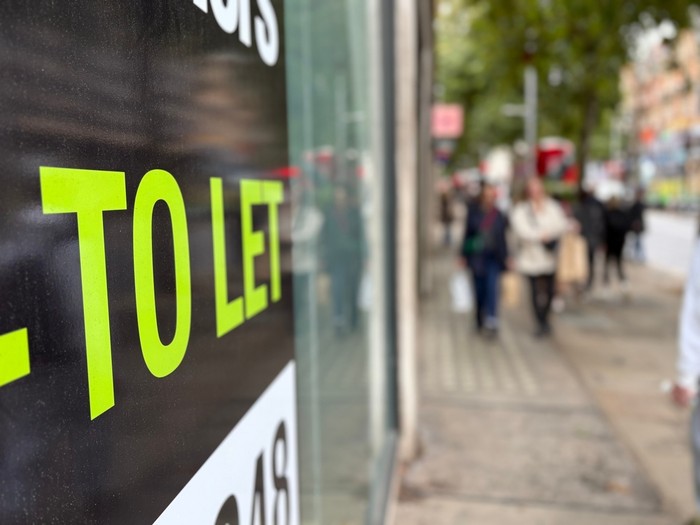
Once again, the number of licensed gambling premises in the UK fell during the 2025/26 financial year.
The total number of properties still open is 8,081, which is a drop of 2% compared to the 2024/25 data.
But the total number of betting shops fell 3.6% to 5,617, which suggests that other areas of land-based gambling – most likely Adult Gaming Centres – have picked up some of the slack.
However, those figures could be even more eye-watering in the 2026/27 report, with the Prime Minister committed to banishing AGCs from the high street, if possible.
Slap bang in the middle of the accounting period was the government’s Autumn Budget of November 2025, which confirmed that Remote Gaming Duty was to be nearly doubled from 21% to 40% as of April 2026.
But the ramifications of that decision were felt immediately, with many ‘hybrid’ operators – those that run betting shops and websites/apps – holding emergency strategy meetings.
The upshot, in many cases, was to close betting shops that barely made a profit, after operating costs are taken into consideration.
Paddy Power revealed their intention to close 57 betting shops in the UK and Ireland, although they stopped short of confirming that the Gambling Tax hike was to blame.
Other firms closed handfuls of their shops up and down the land, although the real downturn has come since the end of the financial year, with William Hill (at least 270 shops), Betfred (132) and Paddy Power (100+) all indicating further closures since April.
And with the government said to be considering a hike of Machine Games Duty, with some speculating on a 100% increase from 20% to 40%, hundreds more betting shops – not to mention bingo halls, casinos and AGCs – could be permanently shuttered during this 2026/27 accounting period.
Fewer Having a Flutter
Alongside their Industry Statistic report, the Gambling Commission has unveiled the latest results of their Gambling Survey for Great Britain (GSGB).
Overseen by the National Centre for Social Research, the survey takes in responses from more than 5,000 adults aged 18+ from across the UK.
The latest set of figures confirm that the percentage of people engaging in non-lottery gambling activity, based upon this set of respondents, has fallen quarter-by-quarter to 28%.
When lotteries are included in the responses, the number of people having had a bet of some kind over the past four weeks increases to 49%, which is typically the same amount as in previous editions of the survey.
The most active age group for betting in the UK is 45-64, with more than half of the respondents in this range having gambled in some way during the prior month.
However, once lotteries are removed, the most active age range when betting on sports, online casino or bingo is 35-44.
Perhaps surprisingly, sports betting was only the third most popular form of gambling amongst the respondents:
- Lottery – 21%
- Scratchcards – 13%
- Sports Betting – 10%
- Instant Win Games – 8%