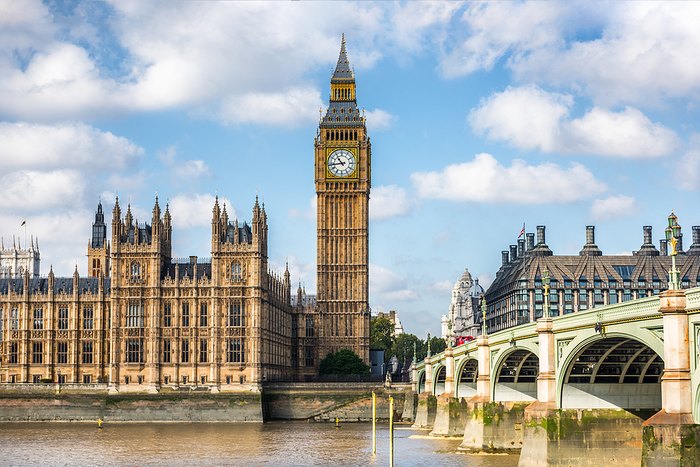
Just as the government starts to flesh out the proposed legislative changes to the UK gambling industry, as first revealed in their White Paper, they go and call a general election.
Brits will go to the polls on July 4, with the latest bookmakers’ odds suggesting that the Conservatives will be turfed out of Downing Street in a comprehensive defeat.
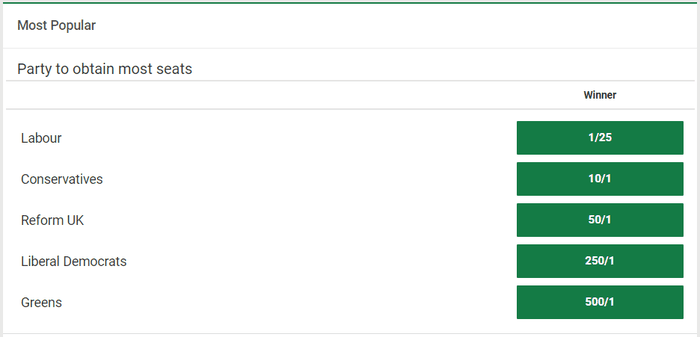
Labour are the most likely winners of the election, and after taking up residence in Downing Street, Keir Starmer and co will have the ability to change UK law – both those that already exist, and those (as is the case with the Gambling White Paper) that have been proposed.
What ramifications could this have for the betting sector?
Best Laid Plans
 The proposals detailed in the White Paper were wide-ranging across the gambling industry as a whole, with few niches within it going untouched.
The current government wanted to introduce a £5 maximum stake on online slots and change the rules on how they’re designed – essentially slowing them down by removing ‘speed play’ features like auto spin, while ensuring that visual elements are more responsible, e.g. a winning spin is not celebrated as such when the prize paid is less than the player’s stake.
Age verification rules would be toughened in retail premises, while some land-based environments were set to benefit from a lifting of the current ban on debit card payments.
There were other recommendations too, with the most headline-generating of these being the possible introduction of affordability checks for a wider range of punters – meaning that more could be asked to provide bookies and betting sites with sensitive financial data to prove that they can afford to bet at their current level.
This is the White Paper proposal that caused more controversy than any other – Labour, should they win the General Election this summer, would of course have the power to kick on with the recommendations detailed in the dossier, or rip it up and start again.
Many of the planned legislative changes need to pass through the Department of Culture, Media and Sport, which would give Labour – should they prevail at the ballots – full licence to decide which they wish to implement and which they want to discard.
Politically, Labour – under Starmer – have moved further into the middle ground; away from the hard left leanings of his predecessor, Jeremy Corbyn. A former prime minister of Labour stock, Gordon Brown, increased gaming duty to 50% during his time in office and shot down plans for ‘super casinos’ in the UK.
It’s quite possible that there would be a certain synergy between the gambling industry policies of Labour and the Conservatives, which would suggest that the new government won’t veer too far from the White Paper’s original findings.
And with most agreeing that more needs to be done to drive down problem gambling numbers, it’s quite possible that Labour would kick on with implementing stricter affordability checks on punters as previously proposed. It’s important to note too that this policy would not require legislative change to be introduced, so there’s less grounds for opposition.
Stuart Sets Sail
A potential change in government means that a new Gambling Minister will be appointed – even if the Conservatives somehow survive the vote.
Stuart Andrew, the current Gambling Minister, will be stepping down as an MP regardless of how the election goes.
His constituency of Pudsey, Horsforth and Aireborough in Yorkshire is effectively being broken into two different jurisdictions, meaning that he no longer has a job as a serving MP.
As of midnight tonight, Parliament will dissolve and there will be no Members of Parliament until after the General Election. As the constituency of Pudsey, Horsforth and Aireborough will no longer exist at this point, I am no longer a Member of Parliament.
— Stuart Andrew (@StuartAndrew) May 29, 2024
Andrew could regroup and look to represent the Conservatives in another area, but that wouldn’t come until after the General Election.
He took up the role in March 2023, overseeing the publishing of the White Paper – the sixth MP to hold the reins of the much-delayed dossier – and the consultation processes that arose from it.
It’s notable that affordability checks, and some of the other proposals in the White Paper, could be implemented without the presence of a Gambling Minister in place – their introduction has now been passed to the UK Gambling Commission, who will oversee a pilot scheme that gets underway in August.