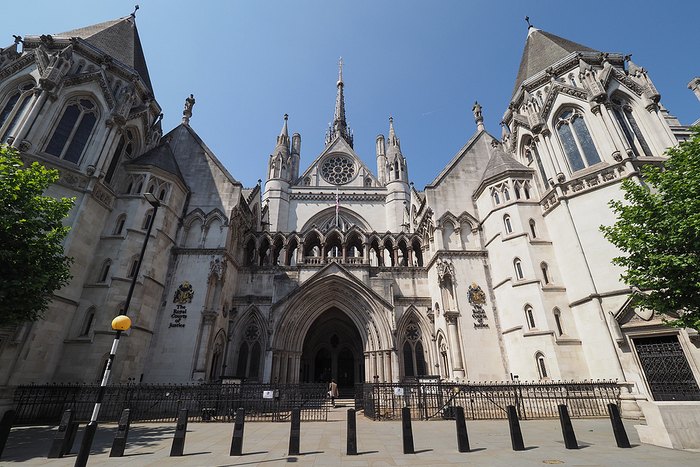
Paddy Power is currently embroiled in a High Court battle with a customer who alleges that they have reneged on a £1 million jackpot payout.
Mrs Corinne Durber and her legal team are in London in a bid to force the Irish firm to pay up the £1,097,132 that she believes is owed to her.
Durber was playing the Alice in Wonderland themed slot Wild Hatter when she thought she’d triggered the game’s ‘monster’ jackpot, based upon the fact that she landed three of the jackpot symbol on her reels.
However, Paddy Power are arguing that the on-screen message relaying her mammoth jackpot win was a mistake, and that she should have been paid the ‘daily’ jackpot instead.
They did pay £20,000 into Durber’s account, which was the designated daily jackpot amount, however she believes she is owed the £1 million plus as denoted in her on-screen communication.
Spinning Around

It’s not the first time that a betting site has hidden behind their terms and conditions relating to a ‘technical malfunction.’
And that is the crux of Paddy Power’s legal argument as the case got underway in the High Court this week.
Their defence lawyer, Philip Hinks, is arguing that the images and messages displayed on-screen during a casino game are merely ‘wallpaper’, and that in reality the only determining factor is the result of the spin as logged via the title’s random number generator, which is then fed into Paddy Power’s central server.
And that, he claims, is what clears his client of any responsibility, as the result logged in their system is that Durber won the daily jackpot, as opposed to the seven-figure ‘monster’ sum.
When the player landed the three jackpot symbols on her reels, she saw the congratulatory message on screen before being taken to the game’s jackpot wheel feature. And this, claims Durber’s lawyer Mark Baldock, entitles her to the full £1 million payout – ‘what you see is what you get,’ he told the presiding judge, Justice Ritchie.
“According to the game rules, Mrs Durber had to ‘spin the jackpot wheel to determine which of the offered jackpot tiers will be won,” Baldock said.
“This is what she did. The jackpot wheel, once spun, showed Mrs Durber that she had won the ‘monster jackpot’, i.e. £1,097,132.71.”
In response, Hinks claimed that the bonus wheel feature is only for ‘entertainment’ purposes.
“It’s a bit more fun. It doesn’t determine anything,” he added.
Instead, a ‘mismatch’ between what was shown on screen and what was logged at Paddy Power HQ confirms that Mrs Durber’s payout was correct, Hinks continued.
The defence counsel has also quoted Paddy Power’s terms and conditions to limit their liability; particularly sections that claim that their customers ‘fully accept and agree that random number generator software will determine all outcomes of the game,’ while stating that the Irish firm is ‘not liable’ in situations where there are ‘system or communication errors.’
In return, Baldock described the use of Paddy Power’s terms and conditions – a lengthy 45-page dossier – as a legal defence as ‘murky’.
For now, the case of Durber vs PPB Entertainment (Paddy Power’s holding company) continues…
Taking On the Big Guns

There have been countless customers that have taken betting sites to court over their refusal to pay out… and so often it’s the plucky punter that is left out of pocket by the court’s verdict.
However, a previous case that may have given Mrs Durber and her legal team confidence is that of Andrew Green, who successful sued Betfred for £1.7 million (and interest) back in 2021.
He had won a jackpot back in 2018 while playing the Frankie Dettori Magic Seven game, but Betfred refused to pay out after claiming a ‘software glitch’ had rendered the winning turn as void.
Having sought legal advice, Green decided to take on Betfred in a battle that eventually made it to the High Court three years after his win.
Justice Foster was quick to throw out Betfred’s T&Cs defence, labelling it ‘just not apt’, while pointing out that the firm’s £60,000 offer to Green as a goodwill gesture – as long as he never spoke about the matter again – was tantamount to a guilty plea.
Betfred were forced to pay out the entire £1.7 million and accepted the judge’s decision. Green was understandably delighted, revealing:
“This is not just a win for me, but a win for everybody in a similar position.”